
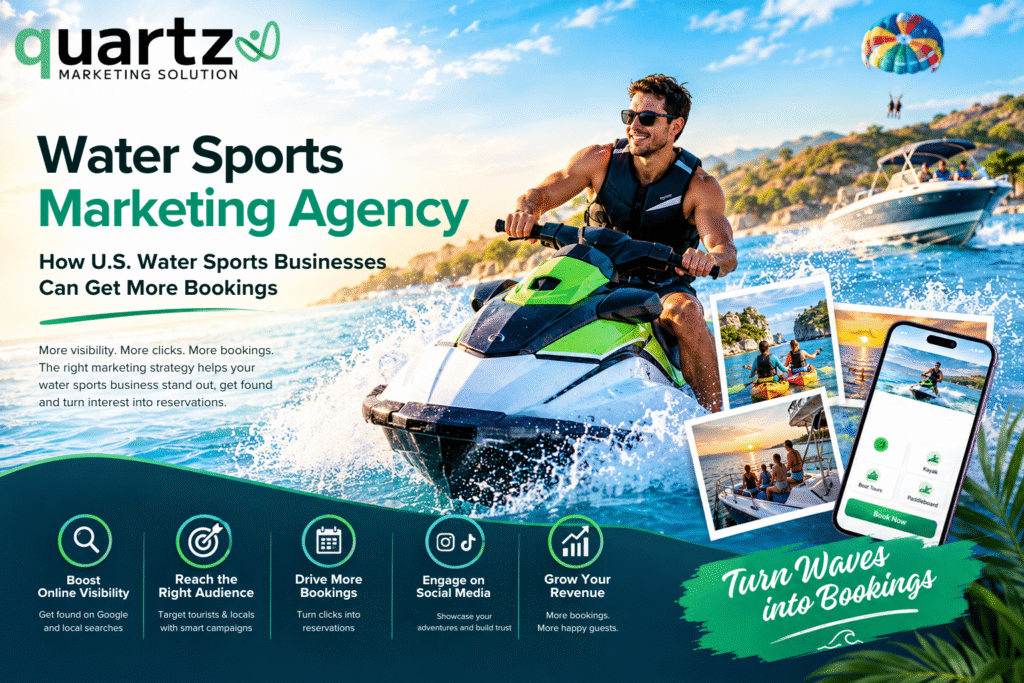
If you run a jet ski rental shop, a kayak outfitter, or a boat tour company, you already know the real challenge isn’t running the business; it’s filling the calendar. You can have the best fleet on the waterfront and still watch slow days pile up because the right customers never found you online. That’s usually where a water sports marketing agency comes in.
This isn’t the same as marketing a dentist’s office or a local restaurant. Water sports businesses deal with weather cancellations, short booking windows, seasonal cash flow swings, and a mix of tourists and locals who all search differently. A generic marketing playbook doesn’t fit that.
Why Water Sports Businesses Need a Different Marketing Strategy
- Seasonality hits hard. Most operators make the bulk of their revenue in a five- or six-month window, so wasted ad spend during peak season is costly.
- Weather changes plans daily. A customer might book, then cancel the morning of, based on wind or rain; your marketing has to help you refill that slot fast.
- Tourists and locals behave differently. A tourist searching “jet ski rentals in Miami” the night before their trip needs a completely different message than a local looking for a season pass.
- Everything happens on mobile. People are booking from the beach, the hotel lobby, or the car on the way to the marina.
- Comparison shopping is quick. Customers often check three or four operators in the same area within minutes, so your site and reviews need to close the deal fast.
- Last-minute demand is real. A sunny forecast can spike search volume overnight, and businesses that aren’t visible in that moment lose the booking to a competitor.
What Does a Water Sports Marketing Agency Do?
A water sports marketing agency builds and manages the online systems that get your business found, trusted, and booked. That typically includes SEO, paid advertising, social content, website and booking-flow improvements, and follow-up systems for people who didn’t book right away.
The value of working with someone who understands the industry isn’t just technical skill; it’s knowing that a paddleboard rental company and a boat charter business have different customer journeys, different price sensitivities, and different seasonal patterns. An agency that’s worked with water sports operators before won’t need to be taught what a “shoulder season” is or why weekday mornings convert differently than weekend afternoons.
7 Marketing Strategies for Water Sports Businesses
1. Build Visibility With Water Sports SEO
Search is still where most of this business starts. Someone types “kayak rentals in Florida” or “paddleboard rentals in California” and picks from whatever shows up first. Good water sports SEO means building out pages around your actual locations and services not stuffing “near me” into every sentence, but making sure Google understands exactly what you offer and where.
For a business with multiple locations or activity types, this often means separate pages for each combination: jet ski rentals in one city, boat tours in another, guided kayak trips somewhere else. Done well, this is one of the more durable ways to keep bookings coming in without paying for every click.
2. Use Google Ads to Capture High-Intent Customers
SEO takes time to build. Paid search fills the gap by putting you in front of people who are searching right now; someone who typed “boat tour Key West today” is close to booking. The trick is bidding on the right terms and sending that traffic to a page built to convert, not just your homepage.
3. Turn Social Media Into a Booking Channel
Instagram and TikTok are practically built for water sports; the visuals sell themselves. Short video of guests riding waves, group photos from a sunset tour, or a quick clip of gear setup does more than a paragraph of copy ever could. Pair that with seasonal promotions and genuine customer reviews, and social media stops being just a brand-awareness tool and starts feeding actual bookings.
4. Improve the Website and Booking Experience
Traffic doesn’t matter if people can’t book once they land on your site. Look closely at:
- Mobile speed and usability
- Clear, upfront pricing
- Real-time availability
- Simple booking forms (fewer fields, fewer clicks)
- Strong photos and video
- Visible reviews
- Clear cancellation and weather policies
A confusing or slow booking flow is one of the most common reasons operators lose customers who were already interested.
5. Use Content Marketing to Answer Customer Questions
Before booking, people search for answers: What should I bring for a jet ski rental? How old do you have to be to rent one? What’s the best time of day for a tour? How much does it typically cost? What happens if the weather turns bad?
Answering these questions directly on your site does two things: it builds trust with hesitant customers, and it gives search engines more relevant content to show. This is basic water sports content marketing, and it works because it solves a real pre-booking concern instead of just promoting the business.
6. Retarget Visitors and Follow Up With Leads
Most website visitors don’t book on the first visit. Retargeting ads remind them you exist after they’ve left your site, and a simple email or text follow-up can recover leads who filled out a form but never finished booking. Neither tactic is flashy, but both consistently recover business that would otherwise be lost.
7. Use Automation to Reduce Missed Opportunities
Marketing automation, used practically, just means fewer leads slip through the cracks. That can look like automatic follow-up on inquiry forms, booking reminders sent the day before, review requests sent after the trip, or reactivation messages sent to past customers before next season opens. None of it needs to be complicated it just needs to run consistently, especially during busy weeks when staff is focused on running the water side of the business.
How to Choose a Water Sports Marketing Agency
- Have they worked with seasonal or weather-dependent businesses before?
- Do they understand local search and how tourists search differently than locals?
- Can they handle SEO and paid ads, not just one or the other?
- Do they track actual bookings and leads, not just clicks and impressions?
- Will they adjust campaigns as your season ramps up or slows down?
- Do they communicate clearly and report results in plain language?
How Quartz Marketing Solution Helps Water Sports Businesses
Quartz Marketing Solution works with U.S. water sports and recreation businesses on the pieces covered above: SEO, local search, paid search and paid social, content marketing, lead generation, website development, conversion optimization, email marketing, and AI-assisted automation for follow-up and lead routing.
The goal isn’t to run every channel at once for the sake of it, but to figure out which combination actually fits your season, your market, and your booking volume. If you’re weighing your options, the water sports marketing services page walks through how that process typically works.
Final Takeaway
Marketing a water sports business comes down to being visible at the right moment, giving people a reason to trust you, and making it easy for them to book once they’ve decided. None of that requires reinventing your business it requires a marketing setup that actually accounts for how your customers search and buy. If your bookings have been inconsistent and you’re not sure why, it’s usually worth having someone take a real look at your SEO, ads, and booking flow before the next season ramps up.
FAQ
What does a water sports marketing agency do?
It manages the marketing systems SEO, paid ads, social media, website, and follow-up that help rental and tour businesses get found online and turn that visibility into bookings.
How can marketing help a water sports business get more bookings?
By making sure the business shows up when people search, giving visitors a fast and clear way to book, and following up with people who show interest but don’t book right away.
What is the best type of marketing for a water sports business?
There isn’t one single answer most operators benefit from a mix of local SEO, paid search, and social media, adjusted based on their season and location.
How does SEO help water sports rental companies?
SEO helps businesses show up when people search for specific activities and locations, like “jet ski rentals in Miami,” which brings in customers who are actively looking to book.
How can I market a jet ski rental business online?
Start with a fast, mobile-friendly website with clear pricing and availability, build out location-specific SEO pages, and use social media to show real customer experiences.
How much does water sports marketing cost?
Costs vary widely depending on the channels used, your market size, and how competitive your area is. It’s best discussed directly with an agency based on your specific goals.
Why is local SEO important for water sports businesses?
Most customers are searching for activities near a specific location, so appearing in local search results directly affects whether they find your business or a competitor’s.
When should a water sports business start its seasonal marketing campaign?
Generally, a few months before peak season begins, so SEO has time to build momentum and ad campaigns are already warmed up when demand picks up.