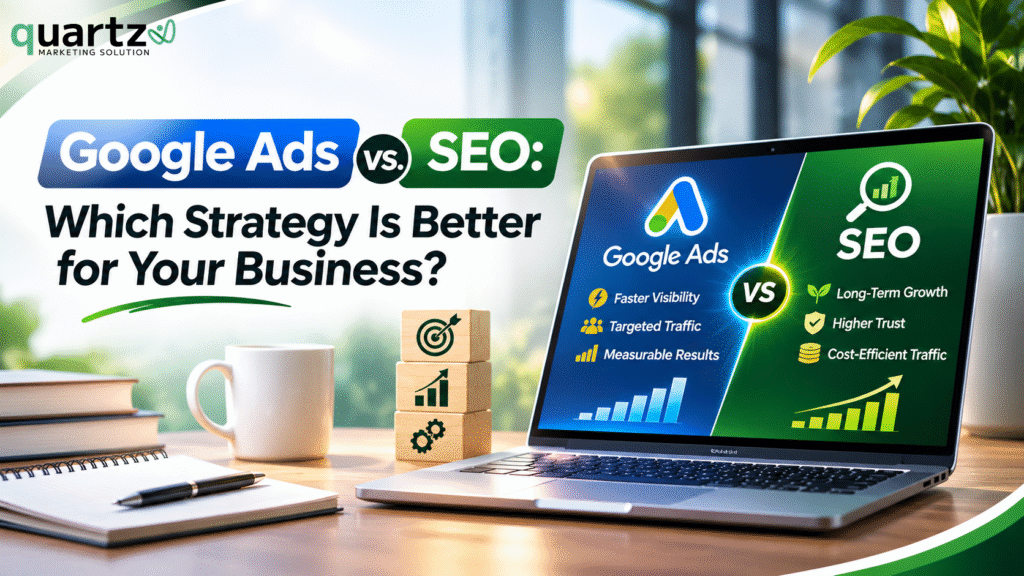
A plumber in Tampa wants more calls this month. A boutique owner in Austin wants steady traffic that doesn’t disappear when the ad budget does. Both are asking the same question: Google Ads vs SEO- which comes first?
Here’s the short answer. Google Ads suits businesses that need controlled, near-term visibility. SEO builds organic visibility that can grow over time. The right choice depends on your goals, budget, competition, website, and timeline. Many businesses end up using both.
What Is the Difference Between Google Ads and SEO?
Google Ads is paid search advertising. You choose keywords and audiences, set a budget, write ads, and send visitors to a landing page. Whether your ad shows depends on Google’s auction, policies, and targeting. You can adjust campaigns anytime, but clicks and conversions are never guaranteed. Professional Google Ads management can help keep spend focused on high-intent searches.
SEO (search engine optimization) helps search engines understand your site and helps people find useful pages. It includes helpful content, keyword research, technical fixes, on-page optimization, internal links, site usability, and local SEO for area-based businesses. You don’t pay per click for organic search traffic, but rankings take time and aren’t guaranteed. Dedicated SEO services typically cover these areas together.
Google Ads vs. SEO: Side-by-Side Comparison
| Factor | Google Ads | SEO |
| Visibility | Paid placements | Organic listings earned over time |
| Timeframe | Can start once campaigns are approved | Usually needs sustained work first |
| Cost model | Ad spend plus management | People, content, and technical work |
| Traffic dependency | Stops when budget stops | Depends on rankings and site quality |
| Control | High (budget, targeting, messaging) | Lower (rankings aren’t directly controlled) |
| Main challenge | Costly clicks, weak landing pages | Competition, slower progress |
Real outcomes depend on setup, website quality, competition, and your business model.
When Should a Business Choose Google Ads?
Paid search often makes sense when you:
- need leads in the near term
- are launching a new service or product
- want to test demand for an offer
- run a seasonal promotion, like an HVAC company advertising spring tune-ups
You also need a way to measure conversions and a team that can follow up on leads. Google Ads isn’t automatically profitable. Click costs, lead quality, margins, and follow-up all matter. If lead volume is the main goal, a dedicated lead generation approach can help connect ads to qualified inquiries.
When Should a Business Prioritize SEO?
SEO is a strong priority when customers regularly search for what you sell, you can invest in useful content and site improvements, and you want less dependence on paid traffic over time. Local service businesses often benefit from stronger organic visibility in their service areas, which is why contractors and home services companies often put local SEO near the top of the list.
SEO isn’t free. You may not pay for each organic click, but earning and keeping visibility takes time, expertise, and budget. Regular content marketing is usually a big part of that investment.
Which Is More Cost-Effective?
Don’t compare cost per click. Compare cost per qualified lead, customer acquisition cost, close rate, customer lifetime value, and margins.
Here’s a hypothetical. A paid campaign brings in 40 inquiries quickly, but most are poor fits, so the real cost per customer is high. An SEO-optimized service page may take longer to gain traction, but it can keep attracting relevant searchers while it stays useful and visible. Neither outcome is a benchmark. The point is that the cheaper click isn’t always the cheaper customer.
Online stores face the same math. An ecommerce growth partner can help weigh ad spend against organic product-page growth.
Can You Use Google Ads and SEO Together?
Yes, and they can complement each other. Paid search data shows which terms and offers convert, which can guide your content priorities. Ads cover near-term demand while SEO builds. Both channels should send people to conversion-focused pages, and both should be tracked for calls, form fills, and sales.
One caveat: running Google Ads does not directly improve your organic rankings. Google has said so plainly. A combined approach is an option, not a requirement. Budget, demand, and capacity should set the mix.
How to Decide: Google Ads or SEO?
Ask yourself:
- Do I need qualified inquiries quickly, or am I building for later?
- Is my budget enough to test paid campaigns properly?
- Does my website give visitors a good experience and a clear next step?
- Are customers actively searching for what I offer?
- How competitive are those search terms?
- Can I measure leads, sales, and profit?
- Can I maintain SEO work consistently?
Start with Google Ads when near-term visibility and measurable testing matter most. Prioritize SEO when long-term organic discovery is central. Consider both when your budget, website, and goals support it. Neither channel is always better.
How Quartz Marketing Solution Can Help
Choosing between Google Ads and SEO is easier with a clear view of your goals, website, and numbers. Quartz Marketing Solution’s digital marketing services cover SEO, local SEO, Google Ads management, content, conversion rate optimization, and analytics with GA4, call tracking, and CRM attribution. The team starts with an audit and a written roadmap, then works month to month with transparent reporting. The aim is a digital marketing strategy built around qualified leads, not just traffic.
Conclusion
Google Ads supports near-term visibility. SEO builds longer-term organic discovery. The right mix depends on your timeline, budget, competition, website readiness, and growth goals. If you’re weighing Google Ads vs SEO, Quartz Marketing Solution can help you map out a plan. Ready to talk it through? Contact the team for a consultation.
FAQs
Is Google Ads better than SEO?
Neither wins every time. Google Ads offers more control and near-term visibility. SEO builds organic visibility over time. The better fit depends on your goals, budget, and competition.
Is SEO cheaper than Google Ads?
Not always. SEO has no per-click fee, but it requires ongoing investment in content, technical work, and expertise. Compare the cost of acquiring qualified customers, not clicks.
How long does SEO take to show results?
It varies with competition, site quality, and the work done. Meaningful progress usually takes sustained effort, and no one can promise a fixed timeline or ranking.
Can Google Ads improve organic SEO rankings?
No. Google states that paid ads won’t improve organic rankings. The two channels can share insights, but they work independently.
Should small businesses use Google Ads or SEO first?
If you need leads soon and can measure conversions, start with Google Ads. If you have runway and customers already search for you, start with SEO. Many small businesses combine both.
Can a business use Google Ads and SEO together?
Yes. Paid campaigns can test terms and offers while SEO builds lasting organic visibility, as long as budget and capacity allow.
How should a business measure performance?
Track calls, form submissions, qualified leads, cost per lead, and revenue for both channels. Clicks and rankings alone don’t show business results.