
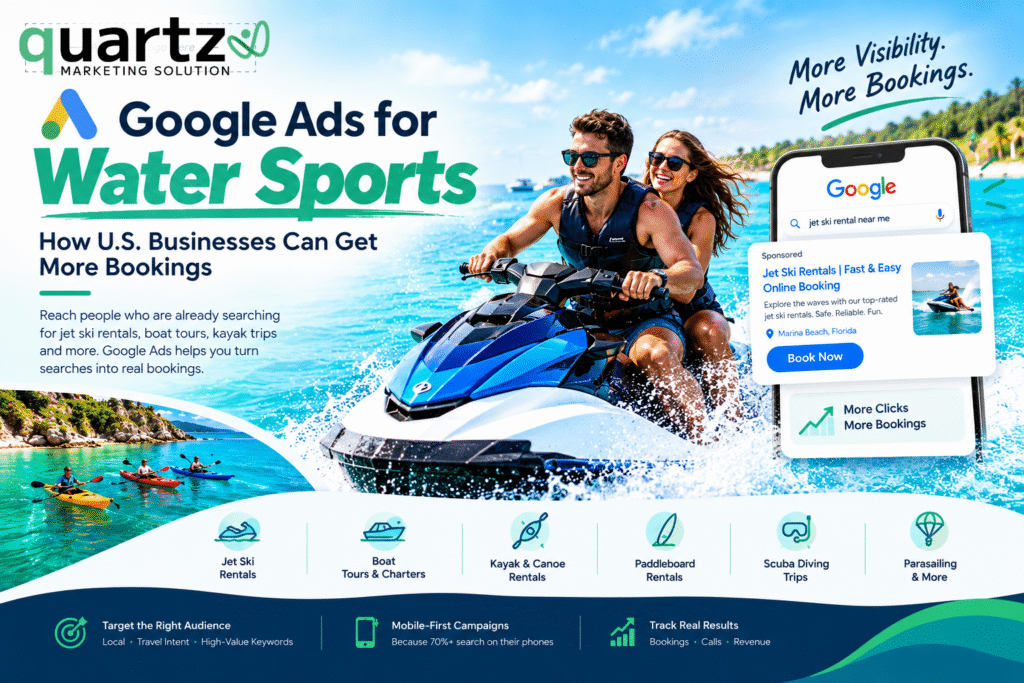
Picture this: your jet skis are gassed up, your kayaks are stacked and ready, your reviews are solid, and your dock is in a great spot. But it’s Thursday afternoon and half of tomorrow’s slots are still open. Meanwhile, somebody two towns over is searching “jet ski rental near the lake this weekend” on their phone right now, and they’re going to book with whoever shows up first and looks trustworthy.
That’s the real problem water sports businesses face. It’s not a lack of demand. It’s a timing and visibility problem. Google Ads for water sports exists to solve exactly that: putting your business in front of people at the exact moment they’re ready to book.
Why Google Ads Matters for Water Sports Businesses
Most water sports customers aren’t browsing casually for weeks. They’re planning a trip, a bachelor party, or a family outing, and they search with a specific activity, date, and location already in mind. That’s a high-intent search, and it’s exactly what paid search is built for.
Organic SEO is worth building over time, but it can take months to rank for competitive local terms. Google Ads gets you in front of that same searcher today. For a business with a short booking window and a lot of same-week demand, that speed matters.
What Water Sports Businesses Can Advertise With Google Ads
Nearly every activity-based water sports service has a natural fit with search advertising, including:
- Jet ski rentals
- Boat rentals (pontoon, speedboat, yacht charter)
- Kayak and canoe rentals
- Paddleboard rentals and lessons
- Fishing charters
- Boat tours and sunset cruises
- Parasailing
- Scuba diving trips and certifications
- Surf lessons and surf schools
- Guided water tours and eco-tours
Each of these has its own booking pattern and price point, which matters when you get into campaign structure.
How to Build a Google Ads Strategy for a Water Sports Business
A strategy that actually produces bookings usually includes:
- Keyword research built around your specific services, not generic boating terms
- Location targeting limited to where you actually operate
- Campaign segmentation by activity, since a $40 kayak rental and a $600 boat charter shouldn’t share a budget or bidding strategy
- Ad copy that mentions price ranges, availability, or what makes the experience different
- Landing pages built for the specific activity being advertised
- Conversion tracking so you know which ads actually lead to bookings
- Negative keywords to filter out irrelevant traffic
- Mobile optimization, since most water sports searches happen on a phone
Skipping any one of these tends to show up later as wasted spend.
Target High-Intent Water Sports Keywords
There’s a real difference between someone researching (“best water activities in Florida”) and someone ready to book (“jet ski rental Miami this weekend”). Ads perform best when they’re built around the second type: specific, local, and close to a purchase decision.
Practical examples of high-intent phrasing:
- “boat rental Tampa”
- “kayak tours Orlando”
- “sunset boat tour Key West”
- “paddleboard rental Lake Travis”
- “scuba diving trip Destin”
Notice these all include a location. That’s not accidental; it’s the single biggest lever in water sports advertising.
Use Location Targeting to Reach Customers in the USA
Water sports businesses are inherently local. A kayak outfitter on a specific lake doesn’t need national reach; they need to be visible to people already near that lake, or people actively planning a trip there.
Google Ads lets you target by city, radius around your dock or marina, or specific tourist zones. For a business near a popular beach or lake, this means you’re not competing with or wasting budget on every water sports company in the state. You’re only showing up where your boats actually are.
Adjust Google Ads Around Seasonality and Weather
This is where a lot of water sports advertising goes wrong: treating it like a business that runs the same 12 months a year. It doesn’t.
Demand shifts with:
- Summer travel season
- Holiday weekends (Memorial Day, July 4th, Labor Day)
- Local weather patterns
- Peak tourist periods specific to your region
- Slower off-season stretches
- Last-minute, same-week booking demand
Budgets and bids should move with actual demand and conversion data not stay locked into a set-it-and-forget-it schedule. A campaign that performs well in July may be a poor use of spend in January, even in the same market.
Create Landing Pages That Turn Clicks Into Bookings
Sending every ad click to your homepage is one of the most common ways water sports businesses lose bookings they already paid for. If someone clicks an ad for “jet ski rental,” they should land on a page about jet ski rentals, not a general site with five other services listed.
Effective landing pages typically include:
- Clear, current pricing
- Real availability or a simple booking calendar
- Photos of the actual equipment or boats
- Reviews
- Safety information
- Directions or marina/dock location
- A mobile-friendly booking flow
- A click-to-call option
- One clear call to action not five competing ones
Track Bookings, Calls and Leads, Not Just Clicks
- Completed online bookings
- Phone calls generated
- Contact form submissions
- Booking requests
- Cost per booking
- Overall conversion rate
Common Google Ads Mistakes Water Sports Businesses Should Avoid
- Using broad, generic keywords instead of specific, local ones
- Targeting areas the business doesn’t actually serve
- Sending all traffic to the homepage
- Ignoring negative keywords
- Not tracking bookings or calls
- Running the same ads year-round regardless of season
- Overlooking mobile users
- Judging success by clicks alone
- Never testing different ad copy
- Skipping regular review of search terms
How Quartz Marketing Solution Can Support Water Sports Marketing
A well-run Google Ads account rarely works in isolation. Pairing paid search with local search visibility, landing-page optimization, and conversion tracking tends to produce a more complete picture of what’s actually driving bookings and where budget is being wasted. Quartz Marketing Solution works with water sports and outdoor recreation businesses on this kind of combined approach: paid advertising, SEO, and lead generation working together rather than as separate, disconnected efforts.
Frequently Asked Questions
Is Google Ads effective for water sports businesses?
It can be, particularly because water sports searches tend to be high-intent; people are often searching close to their trip date with a specific activity and location in mind.
How much should a water sports business spend on Google Ads?
This varies by market size, competition, and season. Many businesses start with a modest test budget, then adjust based on which campaigns actually produce bookings.
What keywords should water sports businesses use in Google Ads?
Specific, location-based keywords tend to perform best: activity plus city or landmark, rather than broad national terms.
Can Google Ads help jet ski rental businesses get more bookings?
Yes, especially for reaching same-week and weekend searchers looking for availability in a specific area.
Should boat rental companies use Google Search Ads?
Search ads are generally a strong fit for boat rentals, since customers are usually searching with clear intent to book rather than just browsing.
How can water sports businesses reduce wasted Google Ads spend?
Tightening location targeting, adding negative keywords, and routing traffic to activity-specific landing pages are the most common fixes.
How should Google Ads campaigns change during the off-season?
Budgets typically shrink and messaging often shifts toward different audiences (locals, off-peak deals) rather than running the same peak-season ads at a reduced level.